30 November 2011

The Picador Book of Crime Writing

I took this anthology edited by Michael Diblin from the library shelf on a whim. I often read detective stories but this wasn't quite what I expected.
I was encouraged by the opening statement in the Introduction that it is dedicated "to the proposition that good crime writing is good writing".   A little further on, it is said that when describing a man coming through a door with a gun in his hand, you don't need half a page describing the door!   This statement resonated with me, as did the statement that "...for every writer who pads out a two-hundred -page detective story to twice that length with decorative frills and flounces there are ten whose work might have been written not just on but by a word processor".
Hmm, I have to say that I can think of prize-winning authors (not of detective stories) whose work seems to me sometimes to come into this category.   Diblin appears to agree, as he says "good crime writing has nothing in common with 'fine writing'".   But I'm definitely not an author and certainly not qualified to judge literary merit, so I won't pursue this angle (surely he wouldn't reach the conclusion that 'fine writing' isn't necessarily 'good writing'....?)!
Back to the anthology, it's a collection of more than 50 short stories, by authors ranging from Ernest Hemingway, Oscar Wilde  and C P Snow through to people I hadn't heard of.  Some are extracts from longer works, and some were written as short stories.  If one's view of traditional "crime" writing is about solving crimes (that is "detective stories"), this isn't a book in the traditional mode.  Many stories are about the committing of a murder! In a few, all the circumstances for the commission of a crime exist, but none actually takes place.  There are some police stories, including one where a gang who have committed a robbery is apprehended, based on information provided by an informer.   There are a couple of stories about hangings.   There's a bizarre story about a bomb disposal team deliberately allowing the bomb planted on a criminal to explode.
It's all unpredictable.   Certainly the variety of scenarios covered in itself kept my attention.

29 November 2011

Brideshead Revisited

I was captivated by Brideshead Revisited mini-series when it first appeared (in the 80s), and waited for every episode.   I also enjoyed it when it was repeated a year or so ago.  Naturally I went to see the movie when it appeared, although I am very selective about which movies I watch as I am not really a "movie" person.  However, I quite liked the movie and when it was on TV at the weekend, I watched it again.
Since there's so much in the Evelyn Waugh story it's inevitable that not everything will fit into a movie of less than 2 hours, especially given that the events span over 20 years.  So the movie of necessity leaves out a great deal of the original story and makes many compromises. In addition, the movie version dramatises the story or, put another way, "sexes it up", although the important theme of the relationship between faith and love is still well portrayed.    At least the movie (thank goodness!) resists the temptation that probably existed to show any "intimate" scenes between Sebastian and Charles - although it does get pretty suggestive! 
Compromises and omissions I can understand, but I do wonder whether some of the departures from Evelyn Waugh's version are really necessary.  Waugh was careful to have Charles state that he was not an atheist, only an agnostic, but the movie stresses his atheism.  The movie has Bridey killed in the blitz, whereas Waugh has him disinherited because Lord Marchmain disapproves of his marriage to Beryl.  And Waugh had Sebastian and Charles travelling third class to Venice without Julia, who wasn't there. But in this respect,  I guess the movie's introduction of an attraction between Charles and Julia while in Venice is a useful prelude to their affair on the crossing from New York (which is certainly in the book).
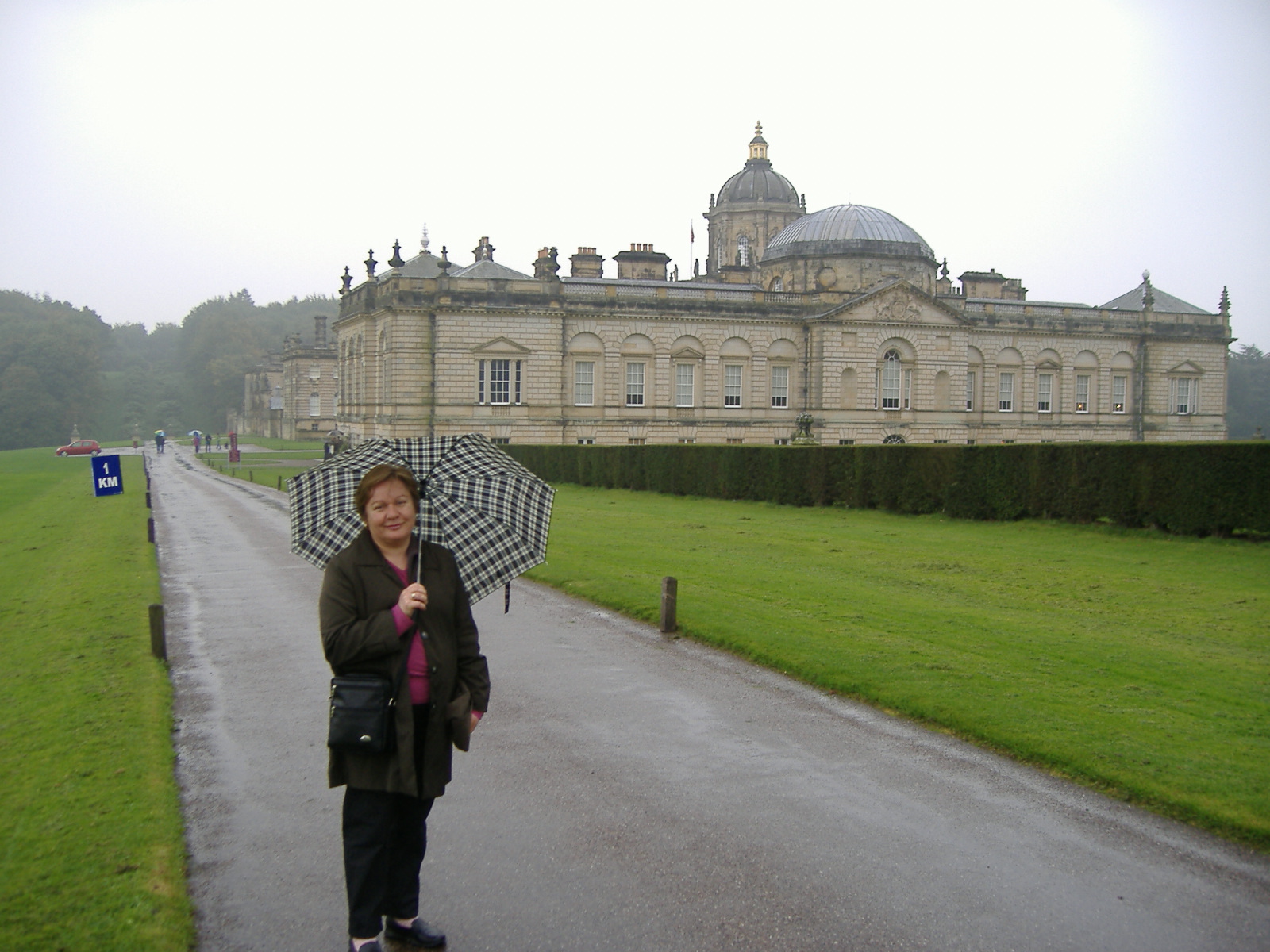
In its favour, the Brideshead scenes in the movie were shot at Castle Howard, as was the case with the mini-series.  Interestingly, Waugh (in the preface to the 1959 edition of the book) broods that, when the book was written in 1944, it seemed that the ancestral seats were "doomed to decay and spoliation like the monasteries of the 16th century".   Writing in 1959, he said, "Brideshead today would be open to trippers, its treasures rearranged by expert hands and the fabric better maintained than it was by Lord Marchmain".  Fast forward to the present, and (taking the liberty of substituting Castle Howard in Yorkshire for Brideshead, said to be in Wiltshire)  his words have turned out to be self-fulfilling.   Here are some images (obviously not as good as those in the movie or the mini-series!)

28 November 2011

An afternoon in the park

I was vaguely aware of the "Friends" group of the nearby park, but the fact that they were still in existence was confirmed when we received a note in the letterbox inviting all the local residents to a "Community Gathering" in the park.    It was a nice afternoon (which was perhaps fortunate considering all the rain we had had the previous day), so we went across.  However, we didn't do a very good job of introducing ourselves to any neighbours that we didn't already know.  Actually, it all appeared very informal, with people mostly just doing the usual "park" things.  So we bought coffees at the park cafe and gratefully received the champagne and cupcakes being handed out, and sat on a bench and enjoyed watching the people, dogs and children having a good time.


27 November 2011

Amici

We once went to a retro diner in Altoona, Pennsylvania, that had the look and feel of the 50s about it.    I think this is it:
One of these days I'll go into more detail about Altoona, where the main workshops of the Pennsylvania Railway were located during the heyday of rail in the US.
But the reason for mentioning this was that I was reminded of this diner when went with friends to Amici Trattoria in Camberwell this week.     This was our first ever visit, even though Amici appears to have been here since the 80s, and little seems to have changed since then in terms of either the décor or the menu (including the offering of cassata for desert).   However judging by the number of people who were there, Amici appears to have a secure position in the market catering to those who like things the way they were.  While the Melbourne-Italian-80s style of cooking could hardly be described as adventurous, the serves were generous and the service was helpful.

26 November 2011

Traffic reports

I was in the car recently, and heard a traffic report.  The message was, avoid Mountain Hwy, Bayswater, the railways booms are still stuck down.   And where was I?  Yes, indeed, in Mountain Hwy in Bayswater, and I had just crossed the railway line without hindrance!   Just why I was there is another story, but the so-called "traffic update" was obviously past its use-by time.  And this was on the ABC!
This incident came to mind several times recently when I heard traffic reports on the radio.    I was listening for reports about the major disruptions in William Street.  The water main is being replaced, and for many weeks now, all north-bound traffic has been blocked off, a city block at a time.    While the work was in the city area, for much of the day, there were major delays at the point where the traffic had to divert.   Now I certainly don't spend my days listening to the traffic reports, but on the random selection that I heard, I did not hear a mention of this work.   It didn't seem to rate, perhaps because it was scheduled and presumably drivers were supposed to be aware of it.   Well, not the ones I saw sitting there in frustration (although admittedly there aren't any in the pic below!).  
I see that the suppliers of GPS devices now offer a real-time traffic update service.   I haven't invested in a service of this nature, but if was minded to do so, I would want to be assured that the services was better than those provided for free on the radio.  These seem often to be based on monitoring specific but limited sources and random information derived from callers.

25 November 2011

Slava

We had a very good time at Michael's Slava earlier this week.   By way of explanation, every Serbian family has a patron Saint, and observance of that Saint's day is one of the most important days in the year for a Serb.  It ranks with Christmas and Easter and is certainly far more important that an individual's birthday.  It's known as the Krsna Slava, or more commonly just the Slava.
On this day, friends and acquaintances come to the house to share in the family's hospitality.  No invitation is necessary.  No trouble is spared in providing great quantities of food, including soup, sarma (cabbage rolls), pork, chicken and other meat, salads and an extensive array of delicious cakes.   Preparation for the Slava also involves preparing a special cake (the Kolač) and the Slava wheat (where the Saint was a living person, but not where the Saint is, for example, the Archangel Michael).   The Kolač  is actually a special bread, which is adorned with the sign of the Cross and other symbols, such as the wording below.  This means "Jesus Christ Conquers".
The Slava wheat is specially prepared and sweetened and flavoured with honey, nuts and sweet spices
During the Slava, the candle remains alight and the family head does not sit down.
 
Although the feast is generous and joyful (there will always be food left over - see below!), Serbs are taught that it must not be overdone and that the celebration should be respectful to the Saint. 

24 November 2011

Getting Bigger

Tilly came around to see us recently.  She had fun with a couple of new toys that had come from the fete.  She's now 15.7 kg and still growing.    

23 November 2011

Tapas

I admit that I came to tapas fairly later in life.    But we had some great ones a little while back, at a local restaurant (Remy) with a former colleague and his wife.    I was particularly impressed by their use of fresh, in-season produce, such as artichokes and asparagus (both of which I really like).  Yes, mushrooms, olives, cheese and so on are all fine, but you can get these at any time.  And I'm not a fan of calamari.   
We followed a selection of tapas with mains (these were nice, too).  On the night we were there, there was live music, which added interest, but it does get a bit much in a confined space.


22 November 2011

"Walk" signs

I don't suppose it's of any real consequence, but sometimes objects that we take as just being "ordinary" become, for some reason, notable.  For example, Berliners take pride in their "Walk/Don't Walk" signs, in that the man with the hat dates from the East/West days, I understand.  He is said to be one of the few features of communist East Germany to have survived the end of the Iron Curtain with its popularity unscathed.    I don't have a photo of the real thing, but here's something in lieu.
I was reminded of this when I drove past some traffic lights in Orrong Rd. where there remains on just one corner one of the original "Walk/Don't Walk" signs that we had in Melbourne.  It's a bit battered, and probably won't last for long, but I wonder whether it's eventual destination will be the scrap heap or a museum!

21 November 2011

Fete

A rainy Saturday wasn't the best day for a fete, but the Very Special Kids organisation were having one nearby.   So, off we went!    The organisers would have liked a larger crowd, I suppose, but even in spite of the weather, there seemed to be a reasonable number of people present.   We spent over $50 within 20 minutes of arriving, so we contributed our share.  Unfortunately, we didn't win anything in the wine lucky dip, but the bananas were good value and we did stock up on jams and a few Christmas presents.


20 November 2011

Pure South

We had an enjoyable dinner at Pure South.   I hadn't been there previously.  In fact, I didn't know of its existence, but I have now learned that this restaurant focuses on Tasmanian foods and wines.     I certainly liked my oysters (with a saffron dressing - an interesting combination) and Huon salmon. Others in the group were also mostly happy with their choices, except that the pork dish apparently wasn't quite the same standard as the rest.    The chocolate delices we shared for desert were very rich, but I really enjoyed my share (of course)!
Presentation of all the dishes was very elaborate, almost "fussy" in some instances.  Sure, this looks good, but I wonder whether the time spent in the kitchen attending to this aspect would be better devoted to other tasks.
The wine list is very extensive, with lots of Tasmanian wines including nearly a page of pinot noirs (to be expected, I suppose).
The catch, of course, is that dining at Southbank is never cheap, and although the prices here weren't what I would regard as "over-the-top" (given the location and standards) in that all the mains other than the steaks were less that $40,  it does kinda get to you when you have to pay three times retail price for a bottle of acceptable but not brilliant wine.  But that's the way of the world, no doubt.
I didn't take any photos, but here's one I found (although we were inside).

19 November 2011

Innovative drains

I have great respect for the engineers of our world.  Over the years, I've worked with a few, but it was never a career possibility for me because the mathematical pre-requisites were too demanding.
For example, we owe it to engineers that our drains flow.  Until something goes wrong, this isn't really a subject that most of us think much about.    A few years ago, someone on the local council apparently took it on themselves to develop some innovative drainage arrangements not far from where we live.  I think the idea was to slow the flow of water into the stormwater system (which can become stressed in this area), so as to spread the load over time.   At the time these works were undertaken, I was sceptical about them.  However, as will be seen from the images below, the system has stood the test of time and still functions quite effectively.   

18 November 2011

The Union Street cafe proposal

Since before we moved to this area, there has been a milk bar nearby.  In recent years, it fell on hard times, presumably hit by the competition provided by the big supermarkets with their extended trading hours.    Perhaps the final straw was the supermarkets discounting the price of milk and the restrictions on the sale of cigarettes.   However, I was always a loyal supporter, buying a paper there every day and often some milk.
The milk bar closed some months ago, and there is now a proposal to convert it into a cafe.  The owner is actually the son of the Greek couple who ran the milk bar a long time ago.  We remember him kicking a soccer ball in the street.  He's now an eminent surgeon.   It seems his family retained the freehold and that the business has subsequently been run by tenants (as will be the cafe).
However, the proposal has encountered a hiccup in that the Council has postponed making a decision about a permit.    The local paper has picked this up, and quite a controversy has developed in the on-line comments.  See:
http://stonnington-leader.whereilive.com.au/news/comments/have-your-say-union-street-cafe-plans/#co
There seem to be a number of interests involved, including users of the tennis courts who would like to have another coffee option, locals who are worried about amenity issues such as parking, (perhaps) the operators and supporters of other cafes in the area (there is an existing cafe at the tennis courts) and, it seems, people from further afield who have views, some of whom seem well acquainted with the proponents (?!)  It seems that both "sides" have been marshaling their forces to win the "numbers" game.   
For the record, this is one planning issue where I am staying on the sidelines!  But I am watching with interest.

17 November 2011

The "Occupy" movement

I have been struggling with the question as to whether I ought to comment on the Occupy Wall Street/Occupy Melbourne etc movements, and, if I do, what I ought to say.   Should I keep a low profile, or would it be OK to let my feelings show?  After some thought and a lot of re-writing, here goes!
It seems that most of us in fact have some sympathy with what the people in these movements are saying, for example in relation of large payments to executives of companies that have gone backwards.  In other words, we all see ourselves as being part of the "99%".
Another take on this is something I read on the internet (not sure if it's true or not, but it feels like it) -
"The reason for the demonstrations [is] that ...  it is no longer true that the rich are getting richer and the poor are getting poorer -- it is, some people have pointed out with figures and graphs, that the super-rich are getting richer, and that the rich and the poor are getting poorer."

So, we're probably all in agreement that our political system isn't perfect.    Frankly, I don't think that's anything new.    Nor is capitalism perfect.  But I just happen to think that the systems we have are less imperfect than any other system that anyone has yet come up with. 
Thus, I do think that anyone who is complaining about the "system" or aspects of it needs to say just where they think the problem is and give some sort of indication as to what they think ought to be done to fix it.   In particular, are they complaining about the "system", such that they want it completely changed, or are they unhappy that it isn't producing the outcomes they would like to see?   In other words,  so the people in these movements aren't happy, but just do they want?   Didn't I read somewhere that the "Occupy movement" was being very careful only to say what they didn't like ( the "system") and not to define what they did want?

This brings me to the Uniting Church's magazine, Crosslight.    I respect the fact that the Uniting Church has strong views on many social issues, although I often don't agree with many aspects of what it says or the way in which  its views are expressed.
However, I was unnerved by the unquestioning attitude adopted by the Church's Crosslight magazine in relation to the Occupy Melbourne movement.  It quoted without qualification or reservation one of the participants in this movement as saying, "The people have a sense that they've lost their democratic right.  The rich can change and shape policy and get rid of governments they don't want while we can't, so we're occupying our country, our workplaces our streets reclaiming our democracy".
The implicit acceptance of these assertions by Crosslight (and in particular, that our political system as a whole was at fault) got to me.   This seems to be going a lot further than saying something to the effect that "I'm annoyed that our political system isn't producing the outcome that I want".  Yes, the Moderator of the Uniting Church at the recent Synod is reported to have said that he was worried about the  all-­too-­common  reliance on ‘tradition, habit and comfort', but I think you need to know where you're going before you chuck out the old.  And I suspect that 99% of the 99% would go along with this.

PS My source for the Moderator's worry is Rev Kylie Crabbe's Theological Reflections at the Synod, see
http://wr.victas.uca.org.au/synod-meeting/2011/theological-reflections/(Kylie is Minister at Armadale Uniting Church).

16 November 2011

Gall Wasp

Everyone who has a lemon tree probably knows about the citrus gall wasp (Bruchophagus fellis)(EDIT - but this doesn't apply to Perth-ites.  Cane toads have reached WA, but not the gall wasp).   Although it's an Australian insect, it has only relatively recently moved south.  It apparently originated in in coastal Queensland and New South Wales, but it is certainly now prevalent in Melbourne.  It causes lumpy growths on the younger branches.  Apparently the wasp itself is only about 3mm long, and the adult lays eggs in young citrus growth in spring. The larvae hatch within three weeks and start feeding inside the stems, causing galls to form.   
The recommended way of controlling the gall wasp is to remove all the galls from the tree (and burn them, or throw them out in a plastic bag).    Our local nursery also suggests sticky insect catchers, in the hope that the wasps will be killed before they lay eggs,   I try and do both, but it's very hard to find and remove all the galls from a mature tree, and I suspect that the insect catchers are far from fully effective.